Stop Memorizing Word Lists: How to Learn Vocabulary in Context with Koki
When starting to learn a new language, almost everyone begins the same way: writing long lists of isolated words with their native translations side by side.
You study fifty words, repeat them until you remember each definition, and feel accomplished. Yet, a few days later, when you try to write an email or join a casual conversation, you freeze. You know the individual words, but you have no idea how to put them together naturally.
This happens because memorizing isolated words strips away their natural environment. If you want to know how to learn vocabulary in context and actually use what you study, you need a method that connects definitions to real-life situations. Here is why contextual learning works and how Koki Flashcards brings it into your daily routine.
The Big Flaw of Studying Isolated Word Lists
Memorizing isolated words forces your brain to store definitions as abstract, disconnected facts.
In real life, words do not exist alone. They live alongside prepositions, specific grammatical structures, tone subtleties, and cultural nuances.
When you study a word in isolation, you miss its collocations—the natural word pairings native speakers use without thinking. You might know what a word means, but you end up using it in unnatural sentences. This approach slows down your reaction time because your brain must translate every single word before forming a thought.

Why Contextual Learning for Vocabulary Is Far Superior
Language researchers have long proven that contextual learning for vocabulary produces deeper, longer-lasting retention.
When you absorb a new term within a complete phrase or sentence, three things happen:
- Cognitive Anchoring: A complete sentence gives your brain a mental story or picture to hold onto, making it much easier to recall later.
- Grammar Without Rules: You absorb correct prepositions and sentence structure intuitively, without memorizing dense grammatical charts.
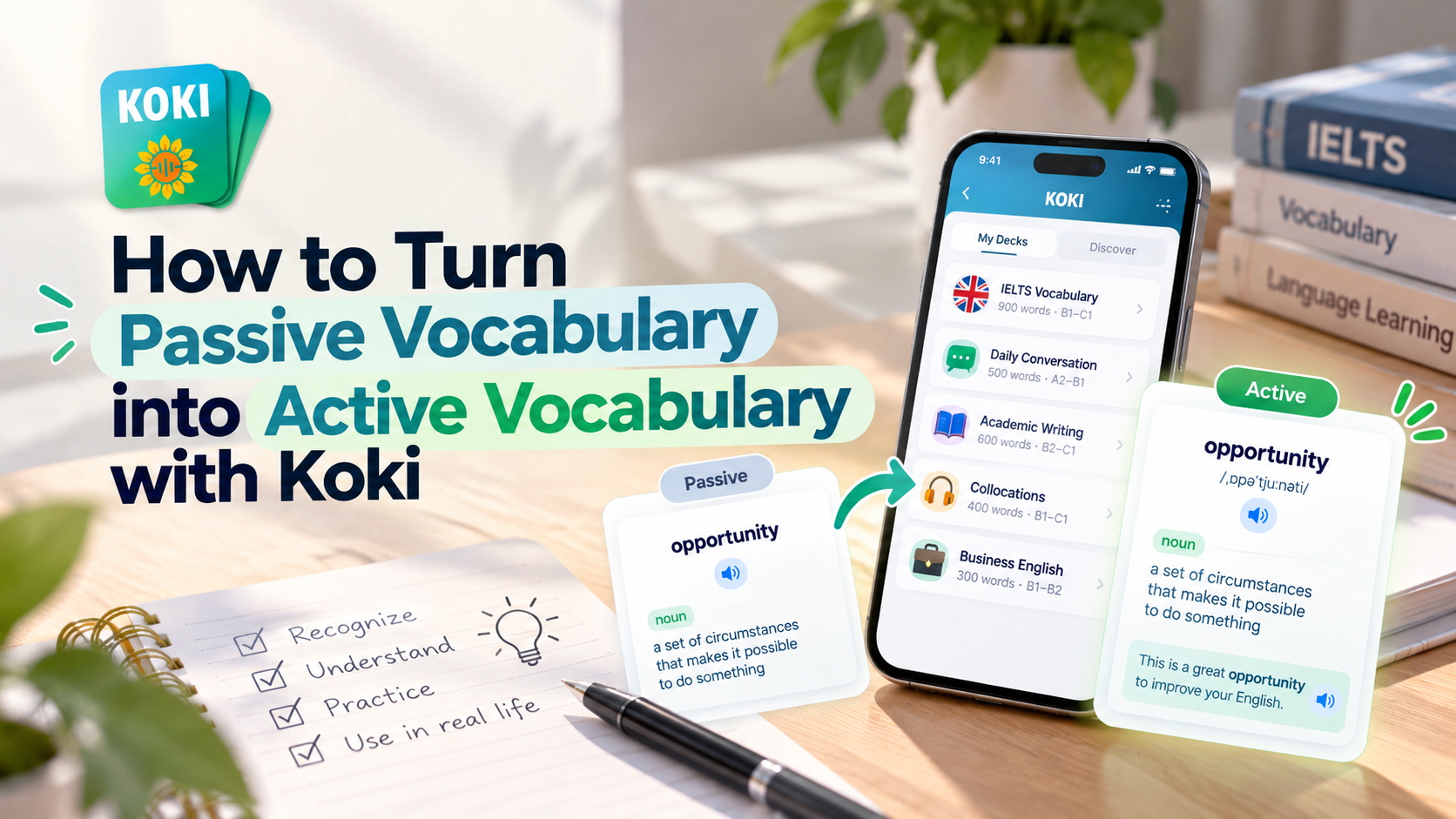
- Instant Usability: You learn how the word operates in real dialogue, turning passive recognition into immediate speaking ability.
Learning words through complete sentences is the best way to remember vocabulary meaning faster and speak without hesitating.

How to Learn Vocabulary in Context with Koki Flashcards
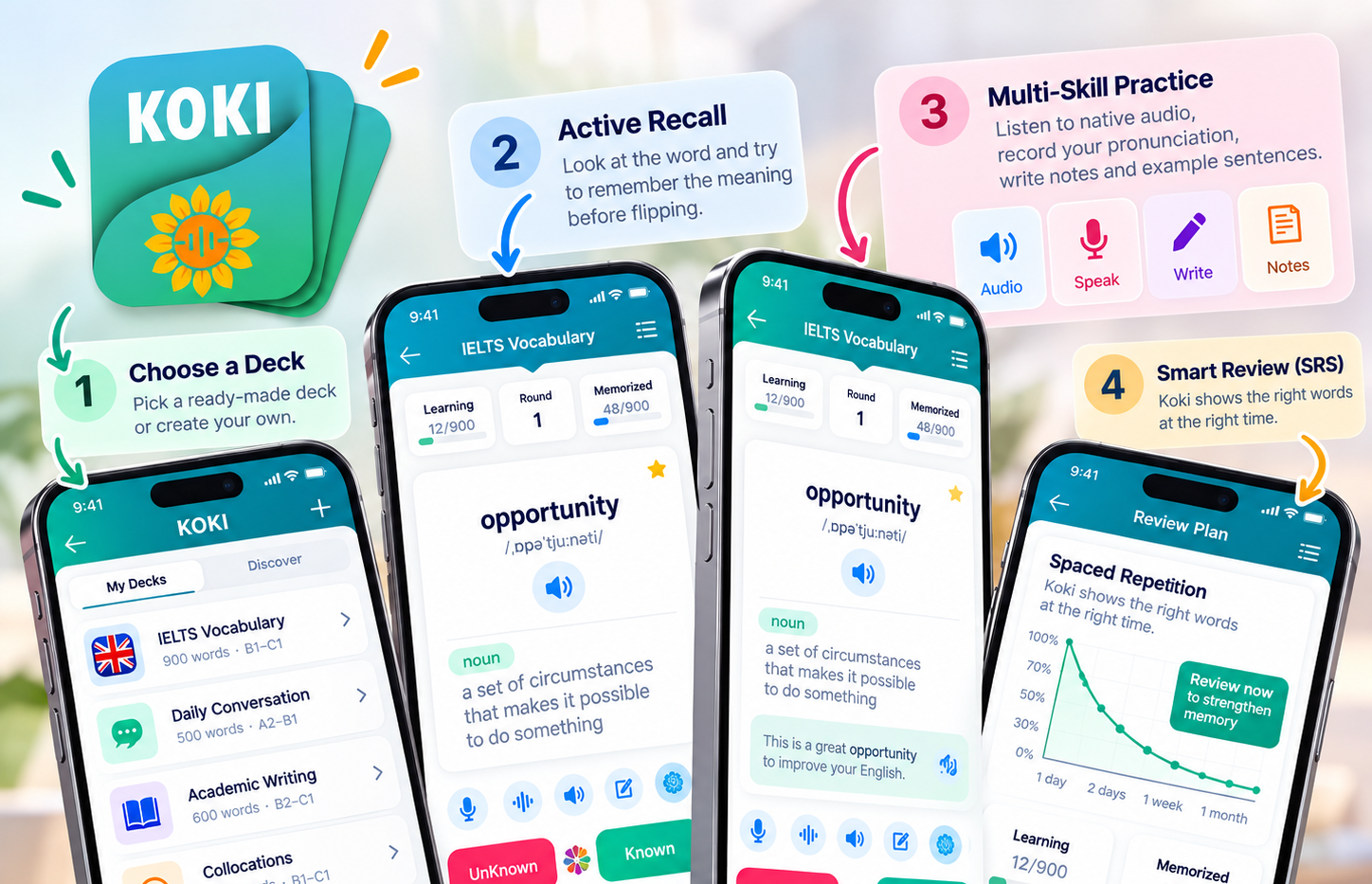
Koki makes contextual learning effortless by embedding complete sentences, audio, and active checks into every flashcard session.
1. Complete Example Sentences on the Back of Every Card
The core problem with traditional flashcards is that they often only show a single word on the front and a one-word translation on the back.
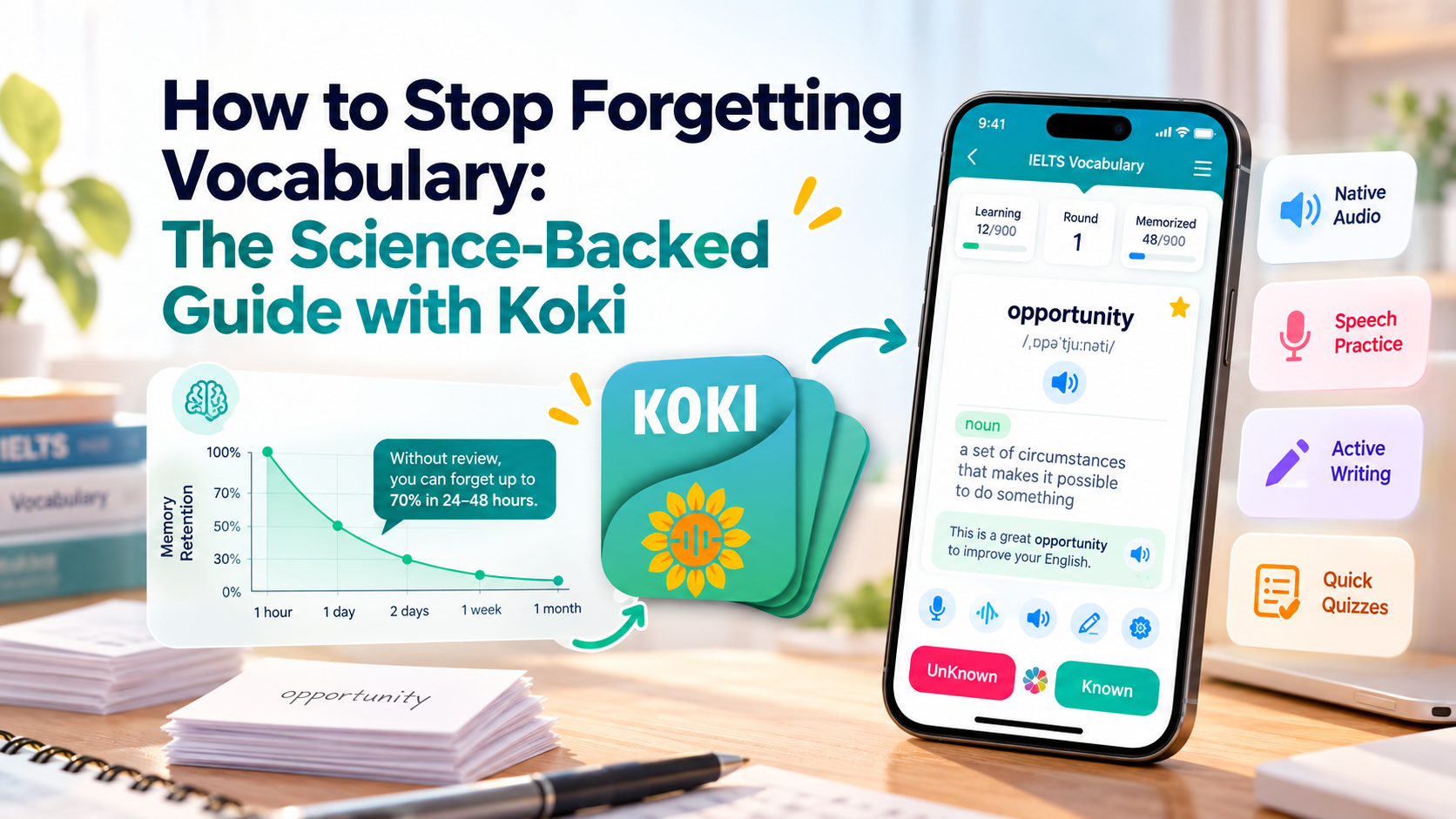
Koki solves this directly. When you flip a flashcard in Koki, you do not just see the definition—you immediately see a rich, authentic example sentence showing how the word works in action.
Seeing the word used in a practical context allows you to understand its tone, accompanying prepositions, and natural placement on the spot. You memorize words with example sentences right as you learn them, eliminating any guesswork.
2. Learn Full Conversational Phrases
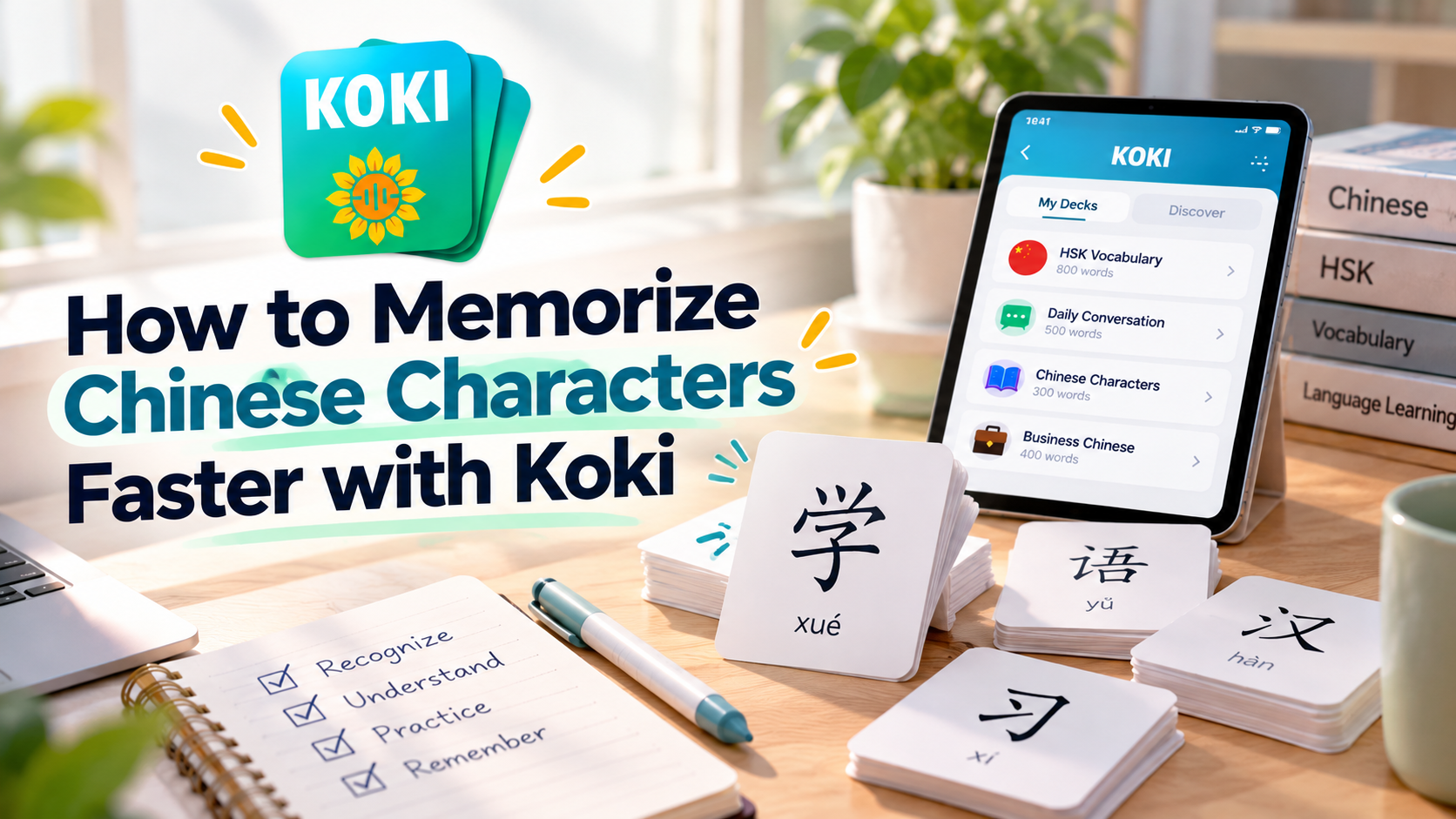
Beyond single words, Koki offers curated decks made entirely of full sentences, such as the 400 Basic Chinese Conversations deck.
Instead of analyzing individual grammar points, you absorb full communicative units that native speakers use every day. This trains your brain to think in whole phrases rather than translating word by word.
3. Add Custom Context with Personal Notes
Context is most powerful when it relates to your own life.
Whenever you encounter a new card in Koki, tap the note icon to write your own sentence about your day, your work, or a funny memory. Linking a new word to your personal experience creates an unbreakable memory hook in your brain.
4. Test In-Context Comprehension with Fill-in-the-Blank Quizzes
Knowing a word in a sentence is one thing; using it correctly under pressure is another.
Koki reinforces contextual learning through interactive quiz modes, especially the Fill-in-the-Blank challenge. Instead of simple multiple-choice definitions, the app asks you to complete partial sentences. This forces your brain to choose the right word based on the surrounding grammatical context.
Simple Rules to Study Words in Context Every Day
To make your vocabulary sessions stick, follow these quick rules:
- Never Learn a Word in Silence: Always read the complete example sentence out loud to connect visual meaning with muscle memory.
- Prioritize High-Frequency Collocations: Pay close attention to the verbs and prepositions that naturally accompany each new noun or adjective.
- Review Actively with Spaced Repetition: Swipe difficult sentences into your daily review rounds until using them feels completely effortless.
Speak Naturally by Learning Words Where They Live
Rote memorization of endless vocabulary sheets is exhausting and rarely produces fluent speakers. Real language fluency comes from understanding how words interact in real-world contexts.
Knowing how to learn vocabulary in context transforms your study sessions from stressful cramming into meaningful practice. With clear example sentences on every card, custom notes, and interactive contextual quizzes, Koki gives you the ideal environment to master vocabulary that you can actually use.
Download Koki Flashcards today, explore our curated decks, and start learning words in the context they belong!