How to Learn Vocabulary with a Busy Schedule (In Just 10 Minutes a Day)
Between packed work schedules, classes, and family responsibilities, finding two quiet hours to sit down with a textbook often feels impossible.
Most people assume they lack the time needed to master a foreign language. They postpone their goals, waiting for the “perfect weekend” that never arrives.
The truth is, learning a language does not require marathon study sessions.
Understanding how to learn vocabulary with a busy schedule comes down to changing your learning architecture-trading long, exhausting sessions for consistent daily micro-habits.
In this guide, we explore how you can build a massive vocabulary bank in just minutes a day using modern cognitive techniques and Koki.
The Power of Microlearning for Language Learning
Cognitive science has repeatedly shown that our brains retain information far better through short, frequent exposures than single, heavy study blocks.
This principle is known as microlearning for language learning.
When you study for two hours straight, cognitive fatigue sets in quickly. Your attention drops, and your retention rate declines after the first 25 minutes.
In contrast, breaking your study routine into bite-sized segments of 3 to 5 minutes keeps your brain alert and receptive.
By focusing on micro-sessions throughout the day, you can comfortably study vocabulary in 10 minutes a day and retain significantly more than you would from a weekend cramming session.
Unlocking “Dead Time”: Where to Find 10 Minutes Every Day
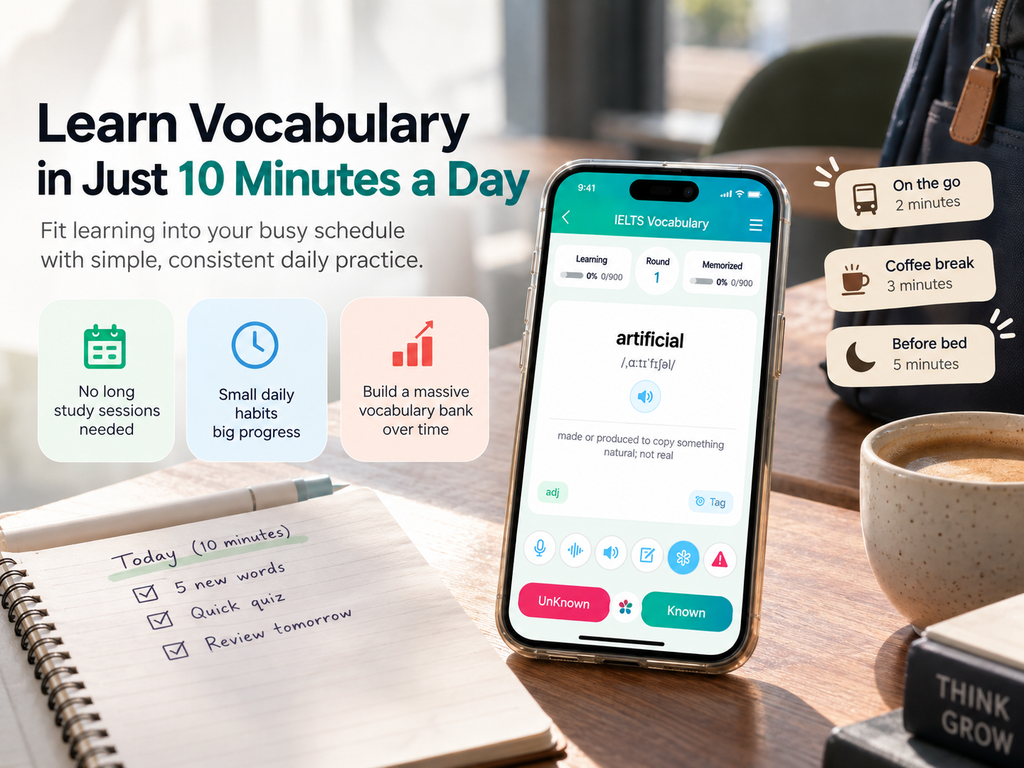
You do not need to clear your calendar to learn new words. You simply need to reclaim idle moments that are already part of your day:
- Waiting in line for morning coffee (2 minutes)
- Riding public transit or sitting in a cab (5 minutes)
- Waiting between meetings or classes (3 minutes)
Instead of mindlessly scrolling through social media feeds, you can redirect these brief pockets of dead time into active vocabulary practice.
How to Learn Vocabulary with a Busy Schedule Using Koki
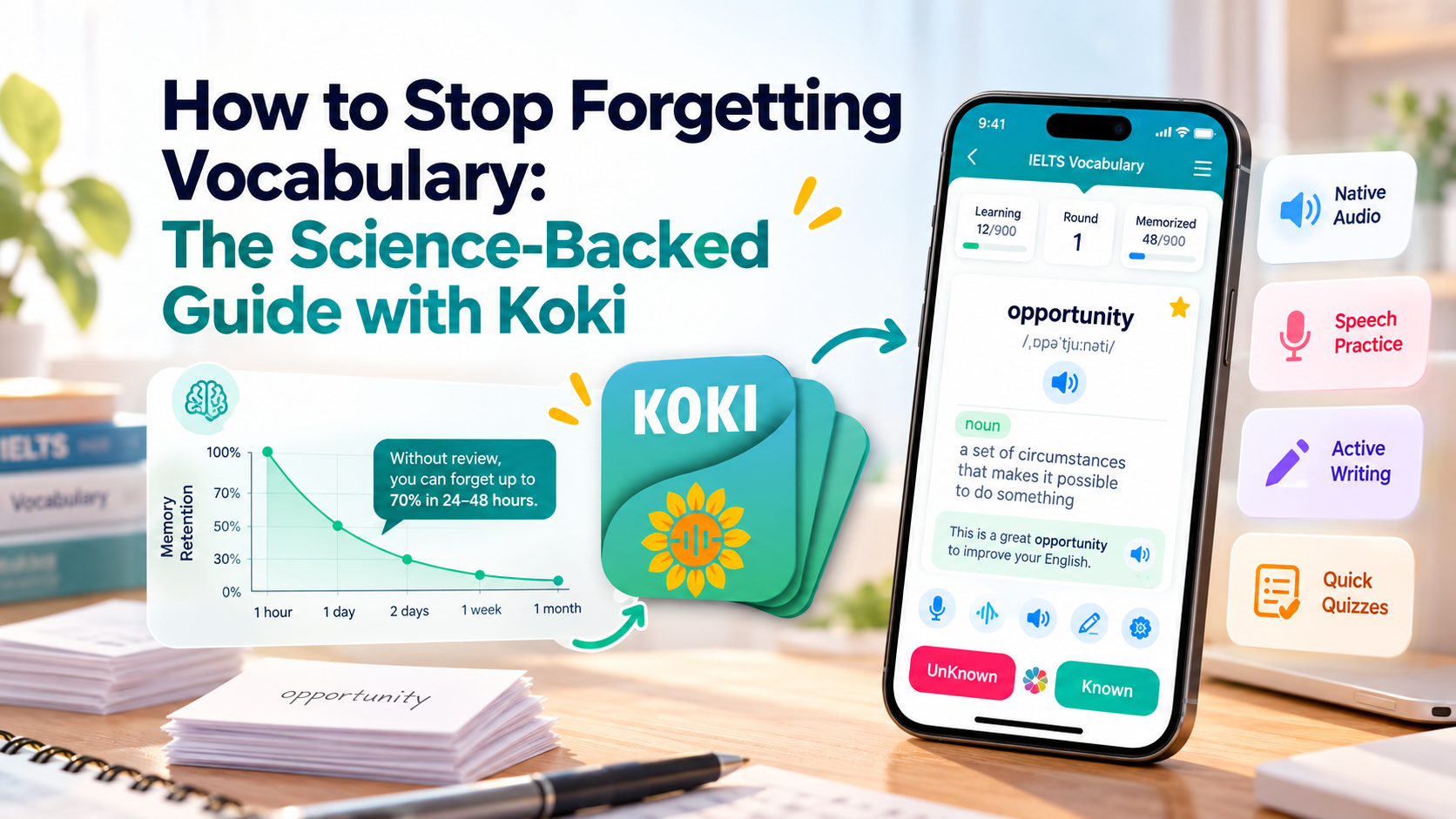
Koki is built specifically to make learning frictionless, allowing you to fit meaningful practice into any daily routine.
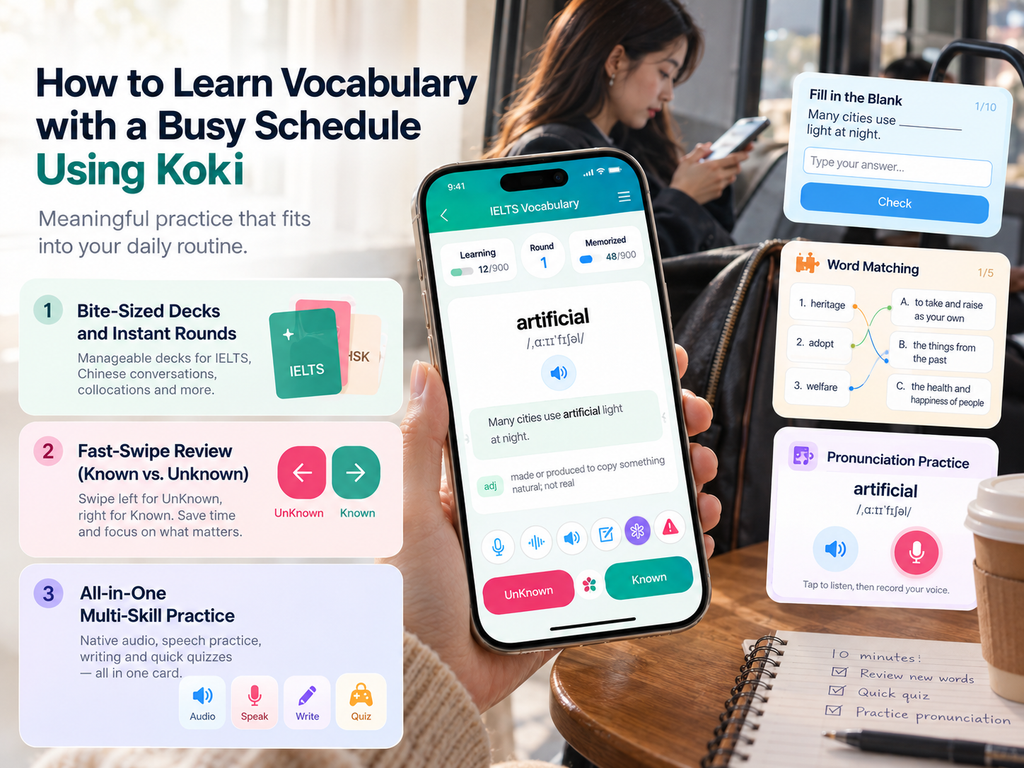
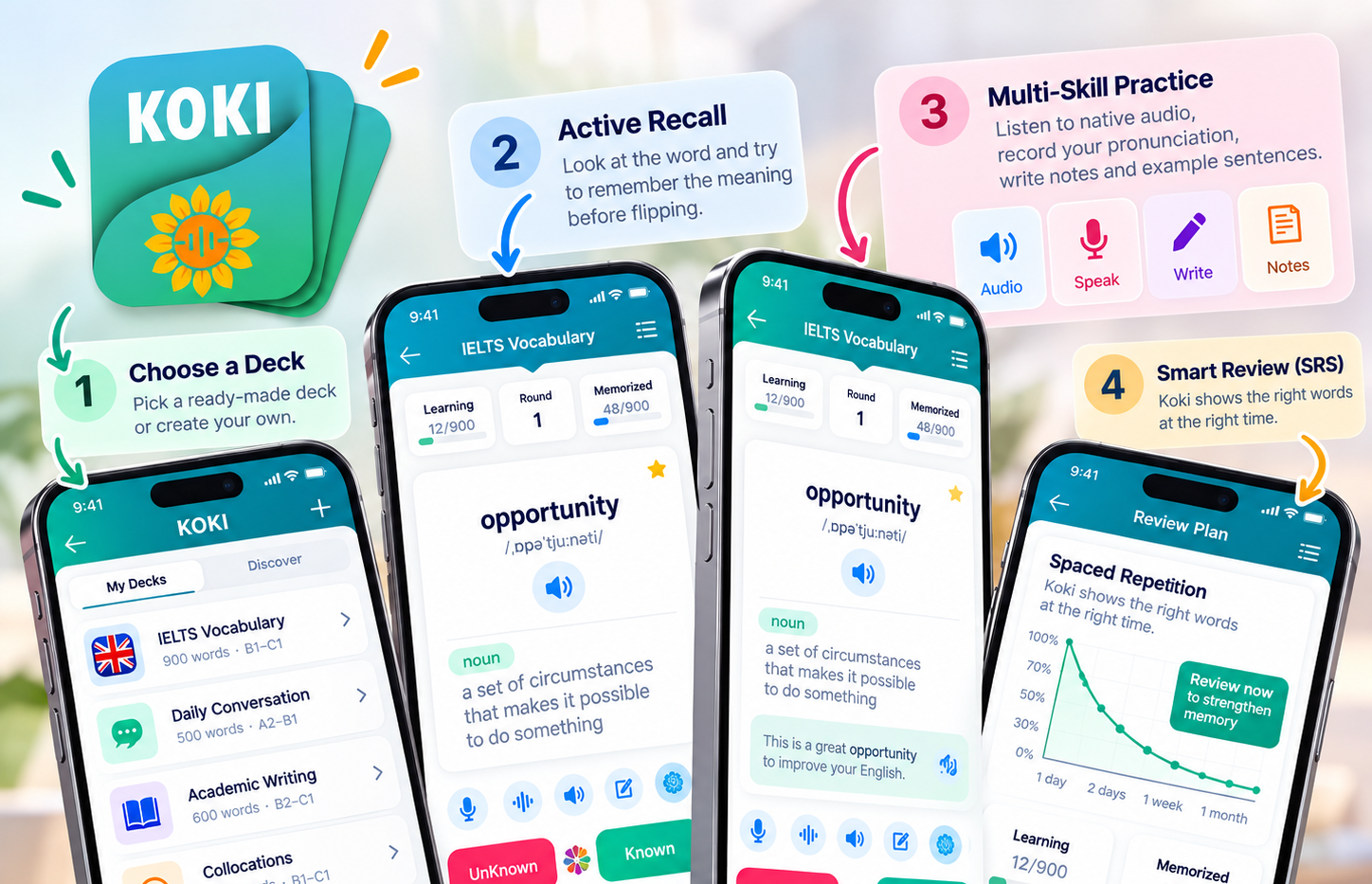
Here is how Koki helps you build a language learning habit without disrupting your lifestyle:
1. Bite-Sized Decks and Instant Rounds
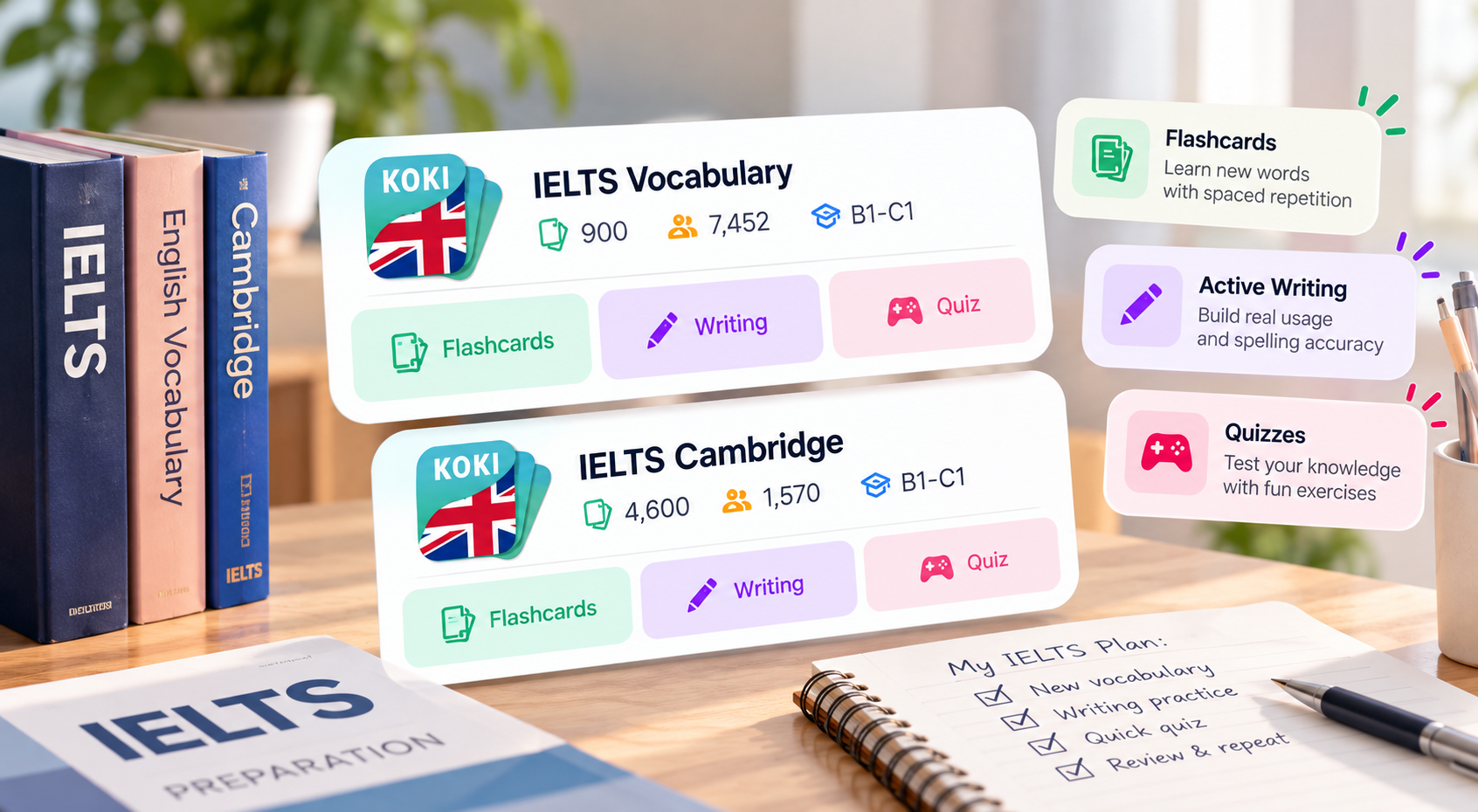
Koki breaks extensive courses into manageable rounds and decks-such as 400 Basic Chinese Conversations, Essential IELTS, or everyday collocations.
Each session takes less than 3 minutes to complete.
Whether you have two minutes before a meeting or five minutes before bed, you can finish a complete review round without feeling overwhelmed.
2. Fast-Swipe Review (Known vs. Unknown)
Time is valuable when you are balancing a packed calendar.
Koki’s intuitive card swiping lets you review words with zero friction:
- Swipe Left (UnKnown): Instantly queues unfamiliar words for reinforcement.
- Swipe Right (Known): Automatically files mastered words away so you never waste precious seconds reviewing what you already know.
The visual progress tracker displays your Learning versus Memorized counts in real time, giving you a quick sense of accomplishment after every session.
3. All-in-One Multi-Skill Practice
A busy schedule should not force you to compromise on pronunciation or writing skills.
With Koki, everything you need is embedded directly on the card:
- Instant Native Audio: Hear native pronunciation on the go with one tap.
- Quick Speech Practice: Test your pronunciation with the built-in microphone tool whenever you have a quiet moment.
- Rapid Quizzes: Reinforce spelling and rapid recall with 60-second word matching and fill-in-the-blank mini games.
3 Practical Rules to Build a Language Learning Habit That Lasts
If you want to discover how to learn vocabulary with a busy schedule and keep your momentum going, keep these three rules in mind:
- Attach study to an existing habit: Open your Koki deck right after your morning coffee or while commuting to establish an automatic behavioral trigger.
- Aim for consistency over volume: Completing 10 words every single day is 10 times more effective than doing 100 words once a month.
- Never break the chain twice: Missing a single day happens to everyone. Just make sure you review at least one quick round the very next day to keep your streak alive.
Turn Small Moments into Big Results with Koki
Fluency is not built in massive weekend cram sessions. It is forged in the small, consistent choices you make every single day.
When you discover how to learn vocabulary with a busy schedule, a lack of time is no longer an obstacle to reaching your goals.
Download Koki today, start your first 3-minute round, and see how fast your vocabulary grows!