How to Use Flashcards Effectively to Learn Vocabulary with Koki
Have you ever spent hours flipping through vocabulary flashcards, only to blank out completely when trying to use those words in conversation?
You are not alone. Most language learners struggle with vocabulary retention not because flashcards don’t work, but because they are using them as passive reading tools rather than active memory triggers.
In this guide, we break down how to use flashcards effectively based on proven cognitive science, and how Koki’s modern flashcard system helps you lock new words into your long-term memory for good.
The Cognitive Truth: Why Most People Use Flashcards Wrong
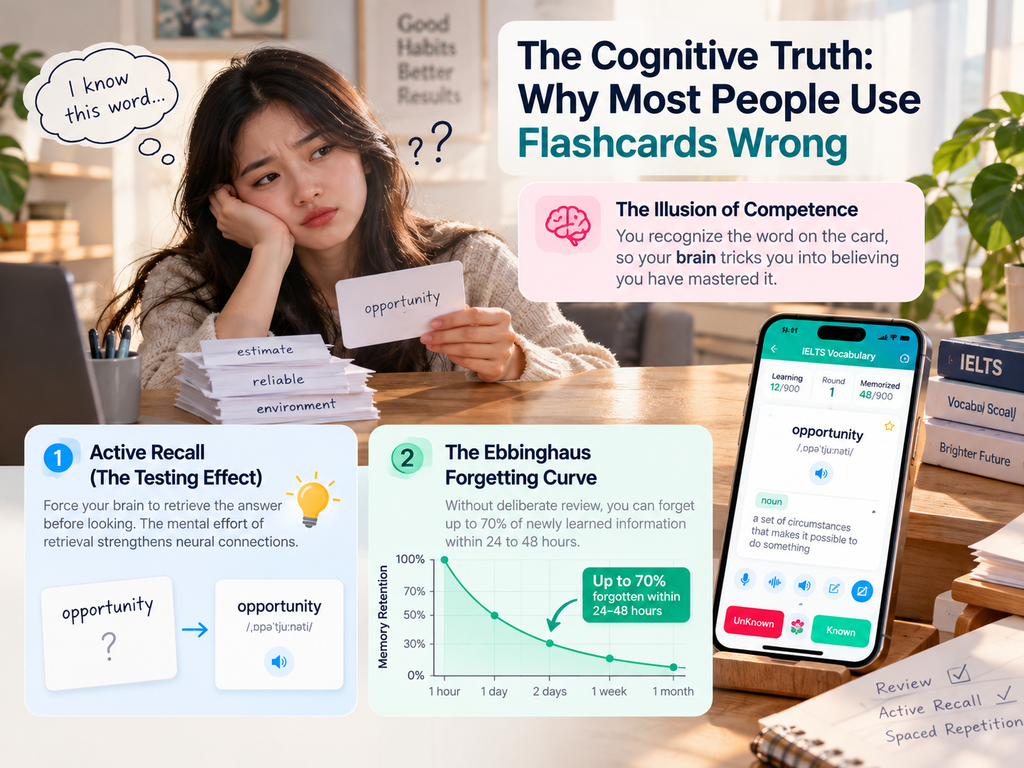
Rereading lists or simply flipping cards without thinking creates a dangerous cognitive bias known as the “Illusion of Competence.” You recognize the word on the card, so your brain tricks you into believing you have mastered it.
To truly learn vocabulary with flashcards, your study routine must satisfy two core scientific principles:
1. Active Recall (The Testing Effect)
Active recall means forcing your brain to retrieve a word or meaning from memory before looking at the answer. Studies by cognitive psychologists Henry Roediger and Jeffrey Karpicke demonstrate that the mental effort of retrieval is what physically strengthens neural connections.
2. The Ebbinghaus Forgetting Curve
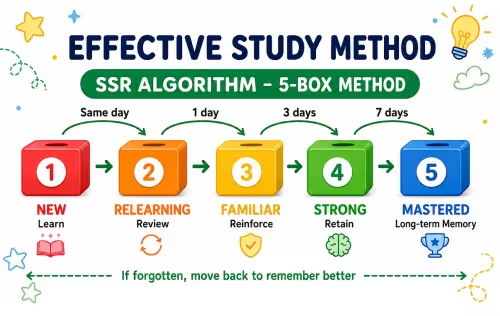
Without deliberate review, humans forget up to 70% of newly learned information within 24 to 48 hours. Flashcards only work if you review words right at the brink of forgetting—a system known as Spaced Repetition (SRS).
How to Use Flashcards Effectively with Koki: A Smarter Workflow
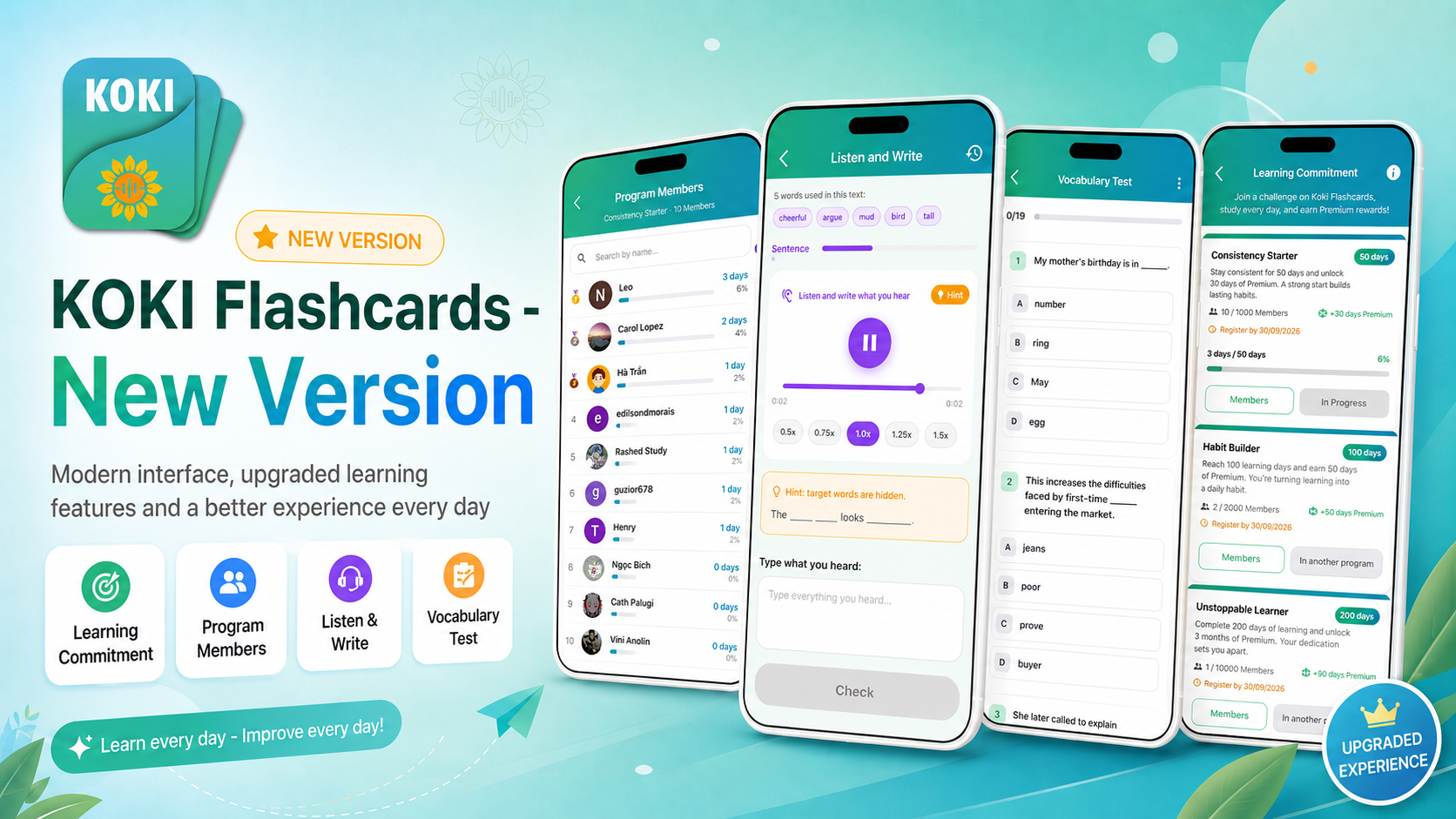
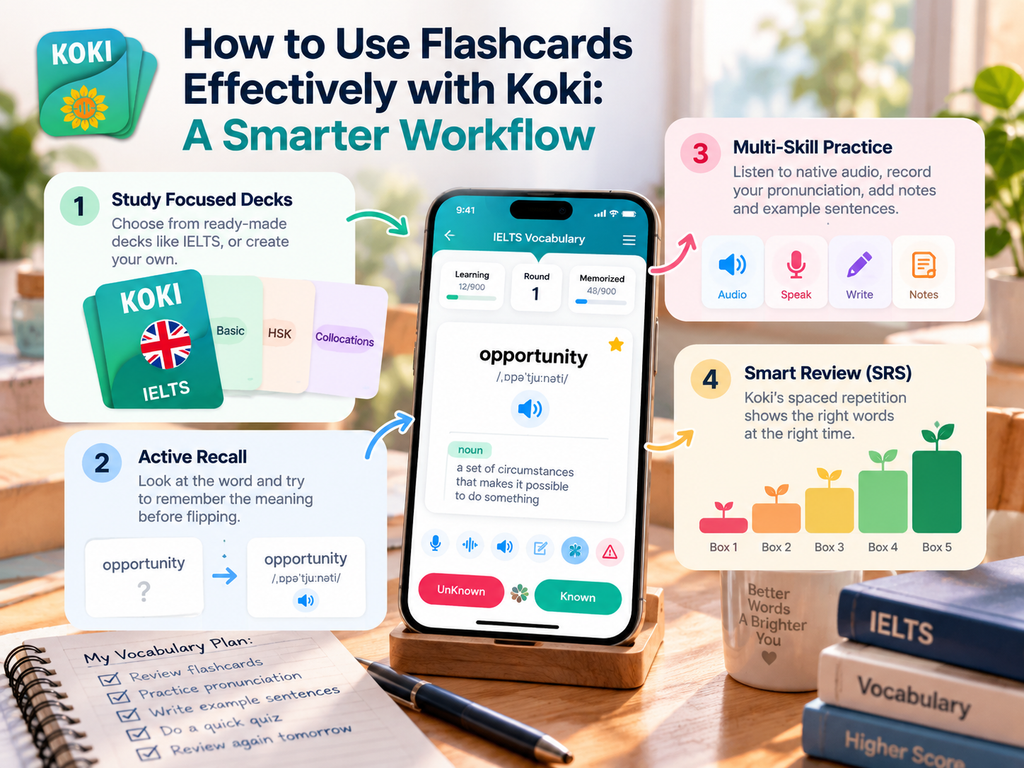
Paper index cards are time-consuming to organize. Koki modernizes the classic flashcard routine with interactive tools designed to train all your senses: reading, listening, writing, and speaking.
Here is how you can study high-frequency vocabulary (like 400 Basic Chinese Conversations, IELTS, or everyday English) using Koki’s interactive features:
1. Make Honest Decisions: Known vs. Unknown Swiping
Effective flashcard practice requires brutal honesty with yourself. In Koki, each card gives you a clear choice:
- Swipe Left (UnKnown): If you hesitated, guessed, or forgot the word, mark it as UnKnown. The card stays in your immediate learning cycle and reappears until retrieval is effortless.
- Swipe Right (Known): Move mastered words directly into your “Memorized” pool, so you don’t waste precious study time reviewing what you already know.
The real-time progress counter tracks your Learning and Memorized counts across each round, giving you immediate feedback on your session.
2. Don’t Just Read-Listen and Speak Out Loud
Silently reading words is one of the biggest reasons learners fail to speak fluently. Koki builds an auditory feedback loop directly into every flashcard:
- Instant Native Audio (Speaker Icon): Tap to hear authentic pronunciation, correct accentuation, and natural cadence.
- Voice Practice (Microphone Icon): Record your own voice to compare your pronunciation against native audio, building the physical muscle memory needed for real-life conversations.
3. Hide Clues to Test True Recognition (The Clover Icon)
A common trap when learning character-based languages (like Chinese Hanzi or Japanese Kanji) is relying too heavily on phonetic transcriptions like Pinyin or Furigana.
- With Koki’s Clover Icon, you can instantly hide phonetic hints and pronunciation guides.
- This forces your visual cortex to identify the original character or spelling with zero assistance. If you ever get stuck, tap again to reveal the hint and verify your answer.
4. Anchor Words in Context with Notes & Sentences
Isolated word pairs are brittle and easily forgotten. If you only learn that a word exists without knowing how to use it, you won’t be able to produce it when speaking.
- Use Koki’s Note/Sentence tool (the edit icon) on any card to add your own personal sentence or context.
- Writing a sentence that connects the word to your actual daily routine or emotions makes the memory exponentially more resilient.
5. Tag Tricky Vocabulary for Fast-Track Review
Some words stick immediately; others require dozens of repetitions before they click.
- Tap the Tag button on challenging words, idiomatic expressions, or high-stakes exam terms.
- You can pull up your tagged decks anytime for a high-intensity refresher right before a test or interview.
3 Golden Rules for Daily Flashcard Success
- Keep Sessions Short and Consistent: 15 minutes of focused daily reviews outperforms a 2-hour marathon on the weekend every single time.
- Cap New Vocabulary: Focus on mastering 10 to 20 new words a day rather than adding 100 and burning out from review backlogs.
- Prioritize Production over Recognition: Try saying the word and using it in a sentence before flipping the card.
Start Learning Vocabulary Smarter Today
Flashcards remain the single most effective vocabulary tool ever invented—provided you use them with an active, structured approach.
Stop wasting hours on passive word lists that don’t stick.
Download Koki Flashcards today, pick your target deck, and transform your vocabulary into fluent speech!